
What Is IP Whitelisting And How Does It Work?
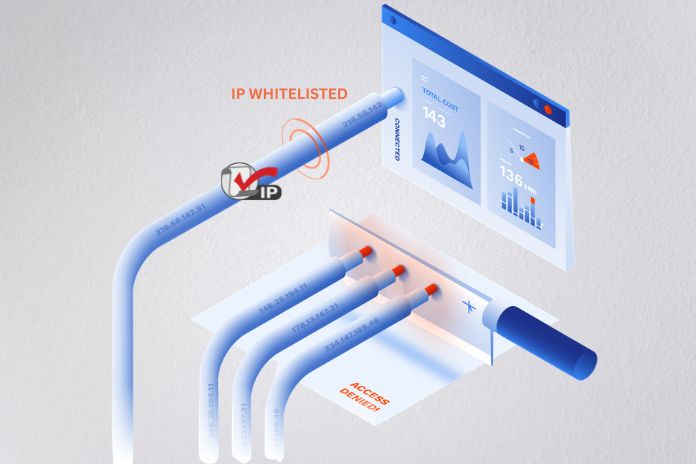
If you are a webmaster, company owner, or a web application administrator, there is a good chance you have heard the term IP whitelisting. Organizations often take different security measures to ensure that no illegal access occurs on their networks or servers. One of the security measures is known as IP allowlisting/IP whitelisting.
Even though the terms allowlisting and whitelisting may seem different, they refer to almost the same procedure for securing information by allowing access only to trusted and authorized IP addresses. In this article, let’s explore IP allowlisting, its working procedure, benefits, and when you should use this security method to protect your systems and resources.
What Is IP Whitelisting?
IP allowlisting (also known as IP whitelisting) is a security feature that permits only known and whitelisted IP addresses to access a system or service. Both terms essentially describe the same concept, although “allowlisting” is a more common term used nowadays.
As an example, companies may blacklist access from their office IP to internal applications using IP whitelisting or enable access only from countries in which their service is available. While the term “whitelist” is common in tech terminology, some organizations have begun using terms such as “allowlist” and “IP allowlisting.”
How Does IP Whitelisting Work?
IP whitelisting requires that a connection’s IP address be approved on a list of allowed IP addresses.
The process is quite straightforward:
- An administrator defines which IP addresses can access the service. They can also restrict or allow access based on specific ranges.
- The user’s IP is validated.
- A user is denied or approved access depending on the validation.
An administrator can configure IP whitelisting in firewalls, web servers, and other systems that require a higher level of security.
Simple Example of IP Whitelisting
Consider a company that has a dashboard containing crucial data. The dashboard is only accessible from the office network. The company’s system only allows dashboard access to users on a certain static public ip address.
Company employees can only access the dashboard from the office network. If they ask for access to be provided from home, the company can suggest that they install the VPN software. The company can also suggest that the employee add his home’s IP address to the dashboard’s allowlisting.
IP Whitelisting VS IP Blacklisting
IP whitelisting and blacklisting are the two primary methods for implementing allowlisting and blocklisting. Both work differently; here is a quick summary:
| Method | How It Works | Main Purpose |
| IP Whitelisting | Allows only approved IP addresses | Restrict access to trusted sources |
| IP Blacklisting | Blocks specific IP addresses | Stop known or unwanted sources |
With whitelisting, the default is to deny everyone and then give access to certain IPs. With blacklisting, the default is to allow all traffic, and certain IPs are prohibited.
Benefits of IP Whitelisting
IP whitelisting is a powerful security tool that, when configured correctly, has a considerable impact on a system’s or application’s safety.
The main benefits of IP whitelisting include the following:
- Enhanced security: IP addressing allowlisting can grant access only to certain groups of people or even specific geographic regions.
- Increased privacy: By using IP allowlisting, you can hide your IP address from services that are available publicly.
- Restricted access: IP whitelisting helps prevent unauthorized access to vital applications such as databases or dashboards. It can also provide network-level security by using allowlisting on firewalls.
- Easy to configure: If your employees or customers connect from an office or home network, it is straightforward to allow this group of IPs. Static IPs, in general, are also straightforward to work with.
Limitations of IP Whitelisting
IP whitelisting can be a valuable asset, but it has several significant drawbacks. First of all, IP whitelisting is not an ultimate security measure. It should be part of a system that utilizes multiple security tools. In addition, IP addresses can change, especially for cellular connections. This can prevent users from accessing a system until their new cellular IP address is added to the allowlist.
It is also important to recognize some cases where the authorized user shall not be provided with the services. For instance, if you are an employee whose PC was hacked, the IP whitelisting will not prevent you from accessing the company’s network. It is essential to add that IP whitelisting should be combined with other protection software such as firewalls, advanced data encryption mechanisms, and multifactor authentication.
When Should You Use IP Whitelisting?
IP whitelisting makes sense when you need to give access to certain networks to services or systems that are only available for trusted IPs. For instance, you may want to restrict dashboard access to only your employees or launch an application that is only available for users at certain geographic locations.
When considering the use of IP allowlisting, you should keep in mind that an employee can switch between networks with different IPs. You may need to allowlist all the networks your employees use or ask your employees to connect via a secure network, like a VPN.
Final Thoughts
In summary, using the IP whitelisting is an important procedure that provides an additional level of protection to systems and applications. It can be applied to allow access to resources only from the user’s IP address or the addresses of specific networks or regions.
The procedure described above can and should be used with other methods to ensure security, such as firewalls and multifactor authentication. However, it is critical to understand that IP whitelisting is not a standalone solution for protecting vital systems.
Also Read: Best AI Image Creation Tools (Free and Paid)
